

For travellers, pilgrims and anyone interested in Assam's religious heritage, Kamakhya Temple offers much more than a temple visit. Its mythology, architecture, Tantric traditions, festivals and hilltop location make it one of the most fascinating places to visit in Guwahati.
In this article, we will discuss about theKamakhya Temple timings, history, religious significance, how to reach, best time to visit, dress code, darshan, Ambubachi Mela and practical visiting tips.
Kamakhya Temple, Guwahati: Quick Overview
It is said that Maa Kamakhya Devalaya as one of the oldest and most sacred of the 51 Shakti Peethas and an important centre of Tantric Shaktism
Kamakhya Temple Timings
One of the first things travellers should check before visiting is the Kamakhya Temple opening and darshan schedule, because the temple follows a daily ritual timetable and may have different arrangements during festivals.
General Kamakhya Temple Timings
Important: These timings should be treated as a general guide rather than a guarantee. Rituals, special pujas, festivals and administrative arrangements can affect visitor access.
What Is the Best Time for Darshan?
For visitors who want to avoid some of the day's heavier crowds, early morning is generally a good choice.
Try to reach Nilachal Hill early rather than arriving shortly before the temple's morning session ends.
Weekends, Tuesdays, Saturdays and major festival periods can be considerably busier.
Where Is Kamakhya Temple Located?
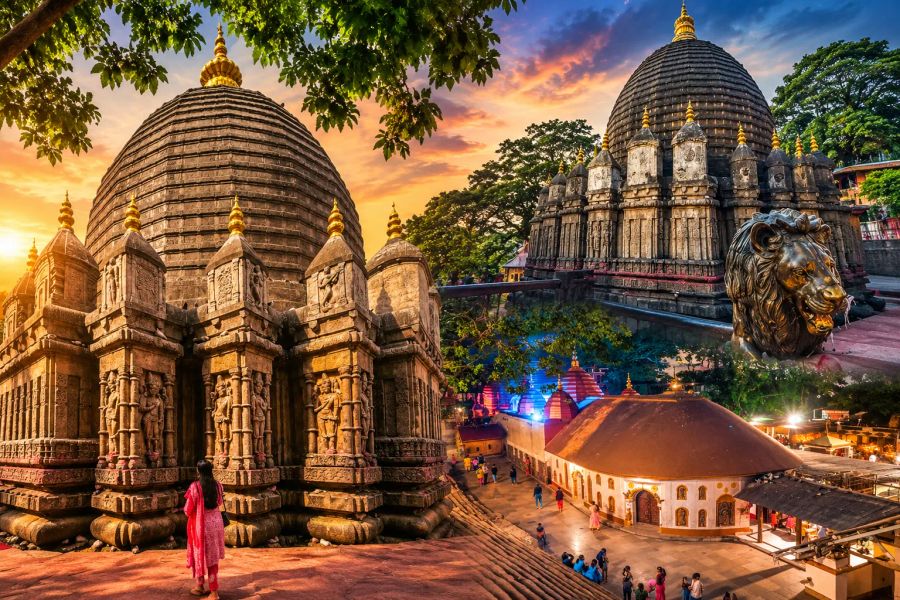
Kamakhya Temple is located on Nilachal Hill in the western part of Guwahati, Assam.
The hill provides a striking setting overlooking parts of Guwahati and the Brahmaputra landscape. The temple complex itself contains several important shrines in addition to the main Kamakhya shrine. Assam Tourism notes that the Nilachal Hill complex includes temples associated with the Ten Mahavidyas, as well as several Shiva temples.
The location also makes Kamakhya Temple an easy addition to a wider Guwahati sightseeing itinerary.
History of Kamakhya Temple
The history of Kamakhya Temple is closely connected with mythology, Shaktism, Tantric traditions and the history of Assam.
The temple is regarded as one of the major Shakti Peethas, sacred sites associated with Goddess Sati.
According to Hindu mythology, Sati, the wife of Lord Shiva, died after being humiliated by her father, King Daksha. Shiva carried her body in grief, and Lord Vishnu used his Sudarshan Chakra to divide it into parts to stop Shiva's destructive cosmic dance.
Different parts of Sati's body are believed to have fallen at different locations, creating the Shakti Peethas.
According to the traditional Kamakhya legend, Sati's yoni fell at Nilachal Hill, making the site sacred to the worship of feminine creative energy.
This mythology is central to understanding why Kamakhya is different from many other Hindu temples.
Why Is Kamakhya Temple So Important?
Kamakhya is particularly significant because the temple represents feminine creative and reproductive power.
Unlike conventional temples where the principal deity is generally represented through a sculpted image, Kamakhya's principal deity is worshipped through a yoni-shaped stone associated with a natural spring. Assam Tourism specifically highlights the absence of a conventional idol in the sanctum.
The symbolism connects the temple with:
- Shakti or divine feminine power
- Fertility
- Creation
- Desire
- Motherhood
- Nature's reproductive cycle
- Tantric traditions
This makes Kamakhya an especially important destination for people studying Indian religion, mythology, Tantrism and Assam's cultural history.
Kamakhya Temple and Tantric Shaktism
Kamakhya is widely associated with Tantric Shaktism.
The temple has historically attracted devotees, ascetics and Tantric practitioners, and the wider Nilachal Hill complex contains shrines associated with different manifestations of the Divine Mother.
The importance of Tantra is one reason Kamakhya has a distinctive identity compared with many other major Hindu pilgrimage centres.
Architecture of Kamakhya Temple
The architecture of Kamakhya Temple is another major reason for its cultural importance.
The present temple reflects a distinctive architectural tradition associated with Assam and the wider region. Its characteristic beehive-shaped dome and sculptural elements make it visually different from many North Indian temple styles.
The present structure dates from the historical reconstruction of the temple, while the sacred importance of the site is considerably older.
The Ten Mahavidyas at Kamakhya
One of the unique features of the Nilachal Hill pilgrimage landscape is its association with the Ten Mahavidyas, the ten major manifestations of the Divine Feminine.
These are:
- Kali
- Tara
- Tripura Sundari
- Bhuvaneshwari
- Bhairavi
- Chhinnamasta
- Dhumavati
- Bagalamukhi
- Matangi
- Kamala
Several temples dedicated to these forms are found around Nilachal Hill. Assam Tourism identifies these shrines as an important part of the Kamakhya religious complex.
If you have enough time, exploring the surrounding shrines can make your visit much more meaningful than simply visiting the main temple.
Ambubachi Mela at Kamakhya Temple
The Ambubachi Mela is the most famous annual festival associated with Kamakhya Temple.
The festival is unusual in the Indian religious calendar because it openly recognises menstruation as a sacred aspect of the Divine Feminine.
Ambubachi Mela 2026
According to the official temple notice, Ambubachi Mahayog 2026 began with Pravritti on 22 June 2026 at 9:26 PM. The temple doors remained closed to devotees during the sacred period and reopened on the morning of 26 June 2026, following ritual observances.
The official temple authorities also issued special instructions concerning entry and darshan during the festival because of the extremely high number of devotees.
Why Is Ambubachi Mela Important?
The festival represents:
- Feminine power
- Fertility
- Creation
- Menstruation
- The regenerative power of nature
- Shakti worship
It attracts devotees, sadhus, spiritual seekers and visitors from different parts of India.
Travel tip: If your primary goal is peaceful darshan, Ambubachi Mela may not be the ideal time to visit because of the enormous crowds and special access arrangements.
How to Reach Kamakhya Temple
By Air
The nearest airport is Lokpriya Gopinath Bordoloi International Airport, commonly known as Guwahati Airport.
From the airport, visitors can take a taxi or other local transport towards Nilachal Hill.
By Train
Guwahati Railway Station is the principal railway station serving the city.
Kamakhya also has its own railway station, Kamakhya Junction, which can be convenient depending on your train route.
From the railway station, taxis and local transport are available to reach the temple.
By Road
Kamakhya Temple is accessible by road from different parts of Guwahati.
You can hire:
- Taxi
- App-based cab
- Auto-rickshaw for suitable portions of the journey
- Private vehicle
Since the temple is situated on Nilachal Hill, traffic and parking conditions can become challenging during major festivals and peak pilgrimage periods.
Best Time to Visit Kamakhya Temple
The best time depends on what you want from the visit.
For a relatively peaceful pilgrimage
Consider visiting outside major festival periods and arrive early in the morning.
For experiencing Ambubachi Mela
June is the key period, but expect exceptionally large crowds.
For sightseeing around Guwahati
The cooler months are generally more comfortable for exploring Guwahati and combining Kamakhya Temple with other attractions.
Assam Tourism specifically highlights June–July because of the Ambubachi festival, although festival season is not necessarily the best choice for travellers seeking a quiet temple experience.
What to Wear at Kamakhya Temple
Because Kamakhya is an important Hindu pilgrimage site, visitors should dress respectfully.
Recommended clothing includes:
- Comfortable traditional or modest clothing
- Clothing covering shoulders and knees
- Comfortable footwear for walking
- Light, breathable clothes during hot and humid weather
Avoid wearing clothing that may be considered inappropriate in a religious setting.
Important Visiting Tips for Kamakhya Temple
1. Reach early
Early morning is generally preferable if you want to minimise waiting and experience the temple before the day's crowds increase.
2. Check the temple schedule before travelling
Temple timings can change during festivals and special rituals.
Always verify the latest information through the official temple authorities.
3. Be prepared for queues
Kamakhya can become extremely crowded, particularly during festivals and important religious days.
4. Follow footwear rules
The official temple website states that devotees must leave footwear at designated locations on the approach road and cannot proceed through the main entrance wearing footwear.
5. Follow photography restrictions
Do not assume that photography is permitted everywhere inside the complex. Follow instructions from temple authorities, particularly around the sanctum.
6. Carry essentials only
Avoid carrying unnecessary luggage. A smaller bag makes navigating queues and crowded areas easier.
7. Stay hydrated
Guwahati can be hot and humid, especially during summer and monsoon months.
8. Expect a different temple experience
The sanctum is not like a conventional temple with a large idol visible from a distance. The sacred form of Kamakhya is associated with a natural rock formation and spring within the inner sanctum.
9. Respect local customs
Kamakhya is a living place of worship, not merely a tourist attraction. Maintain silence where requested and follow instructions from temple staff.
10. Verify official announcements during festivals
During Ambubachi Mela and other major occasions, entry arrangements can change significantly. The official temple website publishes notices and guidelines for devotees.
Places to Visit Near Kamakhya Temple
If you are planning a Guwahati sightseeing itinerary, you can combine Kamakhya Temple with several nearby attractions.
1. Umananda Temple
Located on Peacock Island in the Brahmaputra, Umananda is an important Shiva temple and can be combined with a river cruise.
2. Assam State Museum
A useful stop for travellers interested in Assam's archaeology, history and cultural heritage.
3. Navagraha Temple
Located on Chitrachal Hill, the Navagraha Temple is another important religious site in Guwahati.
4. Brahmaputra River
A sunset cruise or riverside experience can complement a visit to Kamakhya Temple.
5. Srimanta Sankardev Kalakshetra
An important cultural institution showcasing Assam's art, traditions and heritage.
How Much Time Do You Need at Kamakhya Temple?
For a basic temple visit, you may need several hours, depending on the queue and darshan arrangements. For those planning a more extensive journey, you can explore various curated Assam tour packages to make the most of your visit to the region.
If you want to explore the wider Nilachal Hill complex and surrounding shrines, consider keeping half a day.
For travellers interested in religious architecture, mythology and the Ten Mahavidyas, a longer visit can be worthwhile.
Is Kamakhya Temple Suitable for Tourists?
Yes, but it is important to approach the temple primarily as a living religious and cultural site rather than simply a sightseeing attraction.
You do not need to be a devotee to appreciate its:
- Architecture
- Mythology
- History
- Shaktism
- Cultural importance
- Festival traditions
However, visitors should respect religious customs and restrictions.
Kamakhya Temple: A Sacred Landmark of Assam
Kamakhya Temple is much more than one of the most famous temples in Guwahati. It represents a distinctive intersection of mythology, Shakti worship, Tantric traditions, feminine symbolism and Assamese cultural heritage.
Its sacred spring, unique form of worship, Nilachal Hill setting and famous Ambubachi Mela have made it one of the most distinctive pilgrimage destinations in India.
Whether you are visiting Guwahati for a religious journey, exploring Assam tourism, studying Indian culture or simply looking for historically significant places in Northeast India, Kamakhya Temple deserves a place on your itinerary.
Source - Maa Kamakhya Devalaya