
KOHORA, ASSAM: Ahead of the 2026–27 wildlife tourism season, the Assam Government has begun preparations to further strengthen tourism infrastructure and visitor experiences at Kaziranga National Park, one of India's most celebrated wildlife destinations and a UNESCO World Heritage Site.
At a high-level review meeting held at the Forest Convention Centre in Kohora, Assam Forest and Tourism Minister Jayanta Mallabaruah met with resort owners, jeep safari operators, local guides, tourism stakeholders, and senior forest officials to discuss strategies for improving tourism while maintaining Kaziranga's globally recognized conservation standards.
The meeting focused on balancing sustainable tourism growth with wildlife protection, ensuring that visitors enjoy a seamless travel experience without compromising the park's fragile ecosystem.
Stakeholders Invited to Shape Kaziranga's Tourism Future
As part of the government's collaborative approach, tourism stakeholders have been asked to submit written suggestions within 10 days to help finalize operational plans for the upcoming tourism season.
According to the Minister, community participation will play a key role in improving visitor facilities while protecting the park's biodiversity.
"Our objective is to provide an excellent experience for tourists while ensuring that Kaziranga's ecological integrity remains fully protected."
This consultative approach aims to create practical solutions that benefit both visitors and the local tourism industry.
Modern Visitor Facilities Under Consideration
During the review meeting, officials discussed several initiatives aimed at making travel to Kaziranga more convenient and transparent.
Among the proposals being explored are:
- Improved eco-friendly accommodation options across different budgets
- More streamlined online booking and permit systems
- Expanded digital payment facilities
- Better communication channels for tourists and operators
- Stronger safety measures at entry checkpoints through modern surveillance technologies
The government indicated that any future infrastructure development would be planned carefully to avoid disturbing wildlife habitats and migration corridors.
Expanding Tourism Beyond the Safari Season
Kaziranga's core safari zones remain closed during the annual monsoon season to protect wildlife breeding habitats and allow natural flooding cycles that sustain the park's ecosystem.
To support local livelihoods during this period, the government is exploring opportunities to promote tourism outside the core forest areas.
Ideas discussed include:
- Community-based cultural tourism
- Traditional Assamese and tribal homestays
- Guided birdwatching experiences
- Nature trails in designated buffer areas
- River-based tourism activities where environmentally appropriate
If developed sustainably, these experiences could help distribute tourism benefits throughout the year while reducing pressure on the park's most sensitive wildlife zones.
Conservation Remains the Top Priority
Officials reiterated that conservation will remain central to every tourism decision.
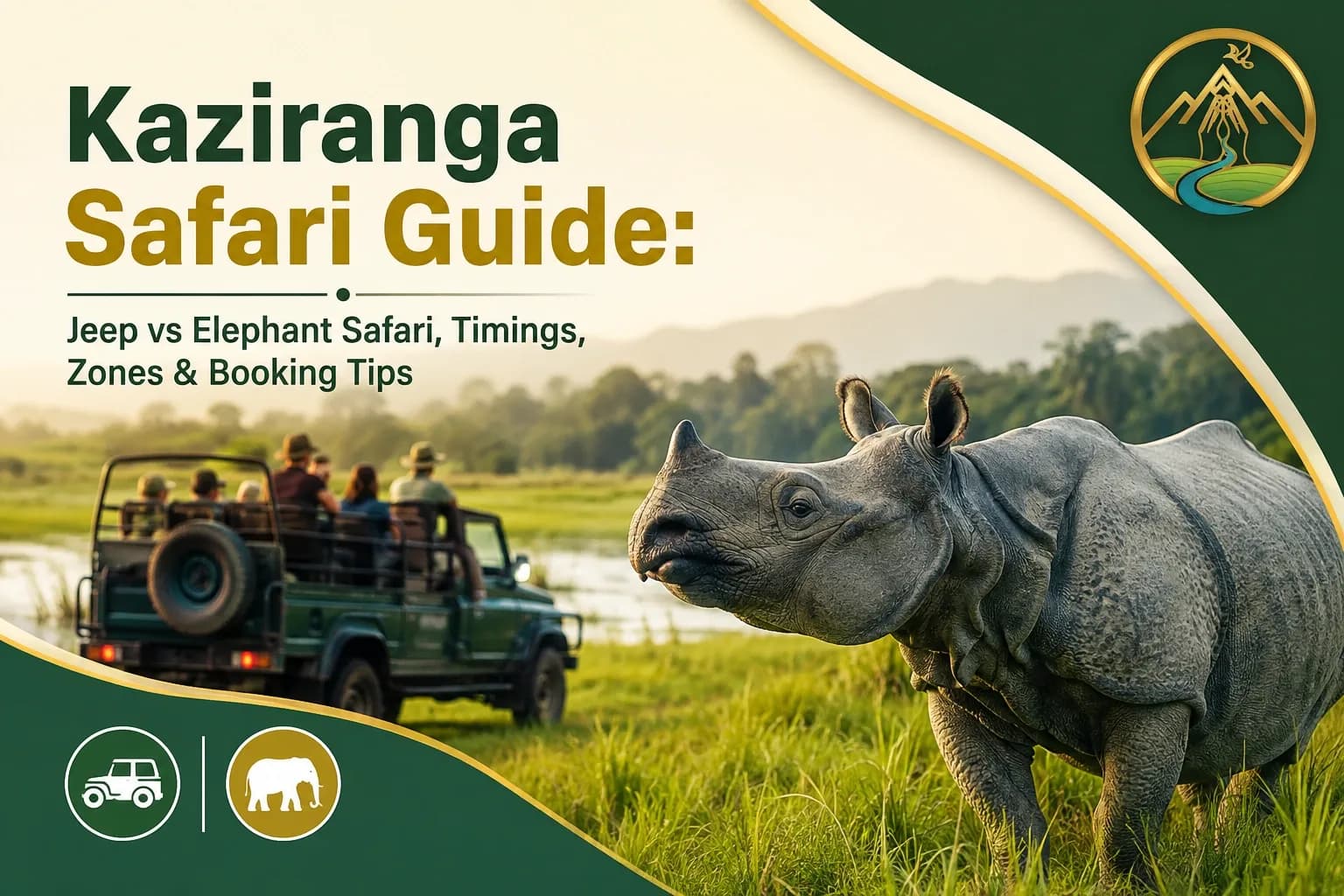
Kaziranga National Park is internationally renowned for protecting the Great One-Horned Rhinoceros, along with elephants, wild buffaloes, swamp deer, Royal Bengal Tigers, and hundreds of bird species.
The Forest Department emphasized its continued commitment to:
- Protecting wildlife habitats
- Preventing illegal encroachment
- Strengthening anti-poaching measures
- Conserving grasslands and wetlands
- Supporting frontline forest staff
The government also indicated that responsible tourism can contribute to long-term conservation by generating resources that support habitat management and wildlife protection.
What This Means for Tourists Visiting Kaziranga
Although many initiatives discussed during the meeting are still in the planning and consultation stage, travelers can expect continued efforts to improve the overall visitor experience in the coming seasons.
Potential benefits include:
- Easier trip planning through digital services
- Faster booking and permit processes
- Better tourist facilities
- Improved visitor safety
- More sustainable tourism experiences
- Additional attractions beyond traditional jeep and elephant safaris
Visitors are encouraged to follow official announcements from the Assam Forest Department and Assam Tourism for updates on any new facilities or services introduced before the 2026–27 tourism season.
Why This Matters for Assam Tourism
Kaziranga is one of Northeast India's biggest tourism attractions and plays a significant role in Assam's tourism economy.
Strengthening visitor infrastructure while maintaining high conservation standards could help attract more domestic and international travelers, create additional employment opportunities for local communities, and further establish Assam as a leading eco-tourism destination.
The government's emphasis on sustainability reflects a growing trend toward responsible tourism, where conservation and visitor experiences are developed together rather than in competition.
Final Thoughts
The review meeting at Kohora marks an important step in preparing Kaziranga Tourism 2026. While many proposals are still under discussion, the government's collaborative approach demonstrates a commitment to improving tourism through better infrastructure, digital services, community participation, and conservation-led development.
For travelers planning to visit Northeast India, Kaziranga continues to offer one of the country's most remarkable wildlife experiences, and the initiatives under consideration could make future visits even more convenient while preserving the park's extraordinary natural heritage.