
Planning a Meghalaya trip but confused about the exact time to go?
One website tells you to visit during winter. Another shows dramatic monsoon waterfalls. Then Instagram displays a boat apparently floating over the transparent Umngot River, without mentioning that the same river may look completely different after heavy rain.
The truth is simple: there is no single perfect month for every traveller.
This guide compares every month so you can choose the right travel window for your itinerary, budget and comfort level.
Quick Answer: What Is the Best Time to Visit Meghalaya in 2026?
Here is the quickest way to choose:
The dry-season clarity of the Umngot River is never guaranteed because it depends on recent rainfall, water levels and local conditions. However, the period after the monsoon generally offers a better chance of clear water than the peak rainy months.
Meghalaya Weather and Seasons at a Glance
Meghalaya’s weather changes significantly with elevation. Shillong and the central highlands remain cooler, while the lower Garo Hills, Ri-Bhoi and southern slopes can feel warmer and more humid. Conditions can also change quickly during a single day, so carrying a light jacket or rain layer is useful in every season.
Best Time to Visit Meghalaya Month by Month
Meghalaya in January: Clear Skies and Winter Adventures
January is one of the best months for travellers who prefer crisp air, dry roads and clear mountain views.
This is an excellent period for boating at Dawki and Shnongpdeng, exploring caves, visiting Shillong and walking through villages and forest trails. The drier weather also makes outdoor attractions more accessible.
Winter mornings and evenings can be very cold in the higher areas. Frost is possible in parts of the central highlands, and some elevated locations can experience near-freezing or sub-zero early-morning conditions.
Best for: Families, couples, photographers, camping and cave explorationDawki condition: Usually among the better months for clear waterWaterfalls: Lower flow than during or immediately after the monsoonWhat to pack: Warm jacket, layers, gloves for early mornings and comfortable footwear
Meghalaya in February: Comfortable and Less Harsh Than January
February retains the advantages of winter but gradually becomes more comfortable during the day.
The skies are usually favourable for viewpoints such as Laitlum Canyons and Shillong Peak. Roads are comparatively easier to navigate, and trekking routes are more manageable than during the rainy season.
This is a good month for travellers who want winter conditions without choosing the coldest part of the season.
Best for: Honeymoon trips, senior travellers, photography and sightseeingDawki condition: Often clear, subject to recent rainfallWaterfalls: Modest flowCrowds: Moderate, especially around weekends
Meghalaya in March: Spring, Sunshine and Pleasant Walks
March marks the beginning of spring in Meghalaya. The highlands remain pleasant, although evenings can still feel cool.
Sunny periods are common, but occasional showers should be expected. The combination of mild weather and manageable roads makes March suitable for Shillong, Sohra, Mawphlang, Mawlynnong, Dawki and the Jaintia Hills. Meghalaya Tourism recommends carrying a light jacket, especially when exploring Shillong and the central Khasi Hills.
Best for: Families, sightseeing, village walks and light trekkingDawki condition: Can remain clear, though spring rain may affect visibilityWaterfalls: Beginning to improve graduallyWhat to pack: Light jacket, umbrella and walking shoes
Meghalaya in April: Warm Days and Occasional Showers
April is warmer than the winter months but remains comfortable in the higher parts of Meghalaya.
It is a good period for travellers who want long sightseeing days before the full monsoon arrives. Nature trails, viewpoints and village experiences remain accessible, though afternoon showers and thunderstorms can occur.
April is particularly suitable for travellers from hotter parts of India who want a cooler hill destination during the early summer.
Best for: Short holidays, families and nature walksDawki condition: Variable depending on rainfallWaterfalls: Moderate and gradually strengtheningPlanning tip: Begin outdoor activities early in the day
May is the bridge between Meghalaya’s mild spring and its powerful monsoon.
The landscape becomes greener, humidity rises and rainfall becomes more frequent. Waterfalls start gaining volume, but weather conditions become less predictable. Travellers may experience sunshine, mist and heavy showers within the same day.
May suits flexible travellers who want greener scenery without facing the most intense phase of the monsoon.
Best for: Green landscapes, quiet stays and flexible itinerariesDawki condition: Clarity begins declining as rainfall increasesWaterfalls: ImprovingReality check: Carry proper rain protection and keep some flexibility in the itinerary
Meghalaya in June: The Waterfall Season Begins
By June, the monsoon has usually established itself across Meghalaya.
Waterfalls become powerful, hills disappear behind fast-moving clouds and the forests turn intensely green. Sohra, Mawsynram and the southern slopes receive particularly strong rainfall. Meghalaya Tourism advises visitors to admire swollen rivers from a safe distance because swimming and water activities may be restricted in many places during this season.
June is rewarding for photographers and monsoon lovers, but it is not ideal for travellers with a rigid checklist.
Best for: Waterfalls, mist, greenery and slow travelDawki condition: Usually not suitable for the famous transparent-river viewTrekking: Difficult and potentially slipperyPlanning tip: Keep at least one buffer day
Meghalaya in July: Meghalaya at Full Monsoon Power
July is for travellers who want to see why Meghalaya is called the Abode of Clouds.
Nohkalikai Falls, Nohsngithiang Falls and countless seasonal cascades become dramatic. Mist flows across the roads, forests shine after rain and Sohra feels completely transformed.
July is also associated with the annual Behdienkhlam festival in Jowai. The festival is one of the most important cultural celebrations of the Niamtre tradition and generally takes place shortly after the sowing season.
However, this is not the right month for every traveller. Heavy rainfall can reduce visibility, affect road travel and make stone steps dangerously slippery. Weather warnings should be taken seriously.
Best for: Monsoon enthusiasts, waterfalls and cultural experiencesDawki condition: Usually muddy or less transparentTrekking: Only with caution and proper footwearWhat to pack: Waterproof jacket, dry bag, anti-slip shoes and quick-drying clothes
Meghalaya in August: Maximum Greenery and Fewer Tourists
August keeps Meghalaya in deep monsoon mode.
Tourist numbers are usually lower than during winter, which can make popular areas feel calmer. Sacred forests, valleys and village roads look exceptionally green, but heavy rain may continue to interrupt travel.
This month works best for travellers who enjoy rain rather than merely tolerate it. It is not suitable for anyone expecting uninterrupted views or tightly scheduled sightseeing.
Best for: Slow travel, quiet homestays and lush photographyDawki condition: Poor chance of clear waterWaterfalls: Near peak flowRoad conditions: Allow extra time and avoid overloading each day
Meghalaya in September: The Transition Towards Better Weather
September often begins wet but gradually moves towards more stable post-monsoon conditions.
Waterfalls remain healthy, the hills retain their rich green colour and clearer periods become more frequent as the month progresses. This can make late September an attractive compromise between monsoon scenery and improved accessibility.
Rainfall is still possible, so travellers should avoid treating September as a completely dry month.
Best for: Waterfalls, greenery and travellers avoiding peak-season crowdsDawki condition: May begin improving towards the end of the monthTrekking: Better than July or August, but trail conditions must still be checkedPlanning tip: Late September is generally more convenient than early September
Meghalaya in October: The Best All-Round Month
For many travellers, October is the strongest answer to the question, “What is the best time to visit Meghalaya?”
The heavy monsoon begins to retreat, the skies become clearer and waterfalls still carry significant volume. Roads and walking trails become more manageable, while the landscape remains fresh and green.
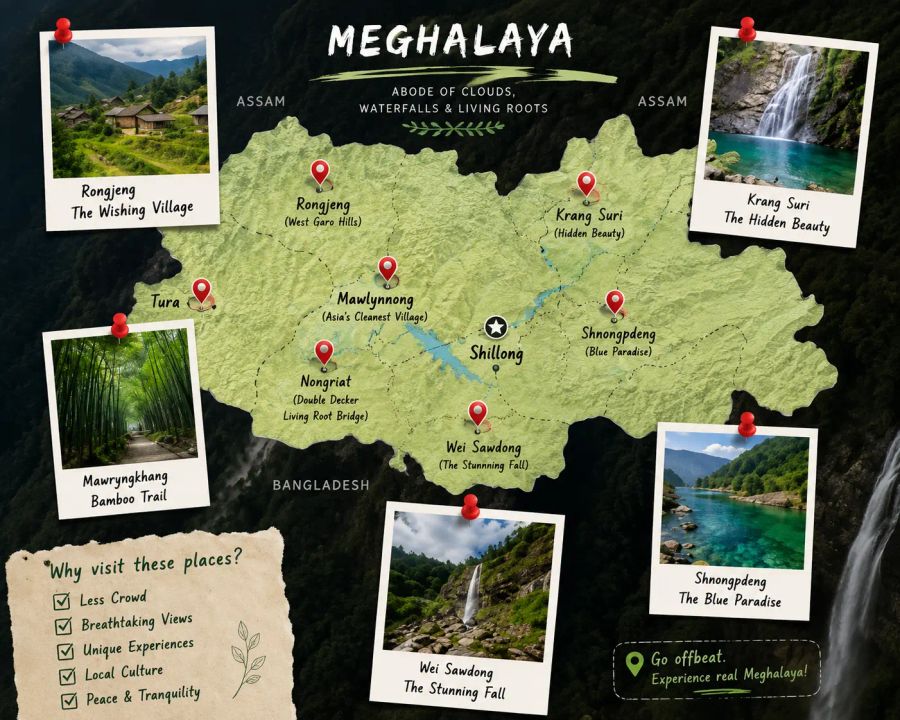
October is suitable for a complete circuit covering Shillong, Sohra, Nongriat, Mawlynnong, Dawki, Krang Suri and Jowai. Post-monsoon conditions also bring more frequent sunshine while preserving much of the landscape’s monsoon character.
Best for: First-time visitors, photographers, couples and complete itinerariesDawki condition: Improving, particularly after sustained dry weatherWaterfalls: StrongCrowds: Increase around holidays and long weekends
Meghalaya in November: Clear Weather and Peak Travel Appeal
November combines post-monsoon freshness with the beginning of Meghalaya’s dry winter season.
The weather is generally comfortable for sightseeing, camping, trekking and river activities. As surface runoff reduces, the Umngot River is more likely to display the clarity for which Dawki and Shnongpdeng are famous.
November is also part of Meghalaya’s harvest and cultural-event period. However, festival dates can change, so travellers should verify the current official events calendar before organising an itinerary around a particular celebration.
Best for: Almost every traveller typeDawki condition: Usually very goodWaterfalls: Moderate but still attractiveBooking advice: Reserve accommodation and transport early
Meghalaya in December: Clear, Festive and Cold
December is one of Meghalaya’s busiest travel months.
The air becomes colder, skies are often clear and Shillong develops a lively winter atmosphere. It is a strong month for couples, families, river activities, caves, markets and relaxed road trips.
Waterfalls are less powerful than in October, but better visibility and more dependable travel conditions make December convenient for a broad itinerary.
Winter is also a busy tourist season, and Meghalaya Tourism recommends advance accommodation booking.
Best for: Christmas holidays, families, honeymoon trips and river experiencesDawki condition: Usually among the best periodsWaterfalls: Reduced flowWhat to pack: Thermals, jacket, warm socks and rain protection for unexpected showers
Best Time to Visit Meghalaya by Travel Style
Best Time for a First Meghalaya Trip
Choose October or November.
These months offer the best balance of active waterfalls, green landscapes, clearer views and manageable roads. They also allow you to include most major attractions without building the entire itinerary around rain disruptions.
Best Time for Families
Road travel is generally more comfortable, walking conditions improve and the chance of prolonged heavy rain is lower. Families travelling with elderly members or young children should still avoid overloading the itinerary with long drives on consecutive days.
Best Time for a Meghalaya Honeymoon
October is also excellent for couples who prefer greener scenery and stronger waterfalls. December is attractive but busier and often more expensive.
Best Time for Waterfalls
Nohkalikai, Seven Sisters and numerous seasonal waterfalls become spectacular during the monsoon. The trade-off is mist, rain, lower visibility and safety restrictions.
Choose October if you want strong waterfalls with more comfortable travel conditions.
Best Time for Trekking
The dry winter months provide better access to remote trails, caves and camping areas. Official tourism guidance identifies winter as particularly suitable for hikers, trekkers, campers and cave exploration.
For the Nongriat Living Root Bridge trek, avoid attempting slippery stone steps during severe rain unless local conditions are confirmed safe.
Best Time for Budget Travellers
Choose July, August or early September.
Accommodation demand can be lower, but cheaper prices come with a practical cost: rain interruptions, slower travel, limited views and the need for buffer days.
A low hotel tariff is not a saving if poor planning forces you to add emergency nights or miss major attractions.
Best Time for Festivals
Traditional and modern events take place across the year, particularly during the post-monsoon and winter periods.
Behdienkhlam is celebrated annually in July in Jowai, while the post-monsoon harvest period is associated with several cultural celebrations. Always check the official Meghalaya Tourism events calendar because dates and programmes may change annually.
Best Time to Visit Meghalaya’s Major Attractions
Dawki and Shnongpdeng
Do not plan your entire Meghalaya trip around a single viral Dawki photograph. Water clarity is natural and depends on rainfall, river flow and conditions on the day of your visit.
Shillong
Shillong is enjoyable throughout the year, but clearer weather improves visits to Shillong Peak, Laitlum and outdoor attractions. Meghalaya Tourism specifically recommends the September or October to March period for the clearest visibility at Shillong Peak.
Sohra and Mawsynram
Monsoon provides the most dramatic scenery, while winter offers greater accessibility and better visibility.
Nongriat and Living Root Bridges
The long stair-based trek requires reasonable fitness. Wet stone steps can become highly slippery during heavy rain.
Krang Suri and Phe Phe Falls
Umiam Lake
Best period: October to March
Cooler weather, clearer skies and stronger sunsets make this the preferred season for Umiam Lake.
Garo Hills
Meghalaya During Monsoon: What You Are Really Signing Up For
Travel articles often describe Meghalaya’s monsoon using words such as “magical,” “dreamy” and “lush.” All of them are true. But they are not the complete story.
What the Monsoon Gives You
You get powerful waterfalls, moving clouds, shining forests, seasonal cascades and landscapes that feel alive. The rain is not merely background weather—it is the main experience.
What the Monsoon Takes Away
You may lose distant views, clear Dawki water, dry trekking routes and predictable travel times. Heavy rain can cause temporary restrictions, slippery paths and road interruptions.
Meghalaya Tourism recommends waterproof bags, proper rain jackets, umbrellas, anti-slip footwear and quick-drying clothes. Travellers should also check daily forecasts and pay attention to heavy-rain and landslide warnings.
Visit in the monsoon for atmosphere and waterfalls, not for a tightly packed sightseeing checklist.
How Many Days Are Enough for Meghalaya?
A realistic trip length depends on how far you want to travel.
Planning to explore more of Meghalaya? Check out our 7-Day Meghalaya Itinerary or 5-Day Meghalaya Itinerary to plan the perfect trip.
Do not treat road distance in Meghalaya like highway distance on the plains. Curving roads, weather, local traffic and sightseeing stops can make short distances take longer than expected.
How to Reach Meghalaya
Guwahati is the main gateway for most travellers.
Guwahati Airport is approximately 100–120 kilometres from Shillong, depending on the route and destination point. The journey commonly takes around three hours in normal conditions but can take longer during peak traffic or heavy rain. Shillong Airport is closer to the city but offers fewer flight options. Guwahati Railway Station is the nearest major railhead, with taxis, buses and shared vehicles available for onward travel.
For a multi-destination Meghalaya itinerary, a private vehicle is usually the most convenient option.
Do You Need a Permit to Visit Meghalaya?
Indian nationals generally do not require an Inner Line Permit to visit Meghalaya.
Foreign nationals are required to complete registration on arrival and may need additional permission for certain border areas. Requirements can change, so international travellers should verify the latest rules before departure.
Carry a government-issued photo ID, particularly when travelling near border areas or visiting locations with security-controlled entry.
What to Pack for Meghalaya
Carry warm layers, a light waterproof jacket, comfortable shoes, sunscreen and a reusable water bottle. Winter travellers should add thermals, gloves and warm socks.
May to September
Carry a proper rain jacket, waterproof bag or dry pouch, anti-slip shoes, umbrella, quick-drying clothing and protection for cameras and phones.
A raincoat is more practical than relying only on an umbrella when walking near waterfalls or trekking routes.
Common Mistakes to Avoid
The first mistake is expecting every attraction to look like its most viral photograph. Dawki may not be transparent after rain, and viewpoints may disappear behind clouds.
The second is planning too many distant attractions in one day. Shillong, Sohra, Dawki and Jowai should not be compressed into an unrealistic schedule simply because they appear close on a map.
The third is ignoring weather alerts during the monsoon. Heavy rain can change trail and road conditions rapidly.
The fourth is travelling without warm clothing in winter. Meghalaya may be in Northeast India, but elevated areas can become surprisingly cold.
The final mistake is choosing the cheapest month without considering the type of experience you want. The lowest price does not always produce the best holiday.