
There are places you travel to for the destination. And then there are places you travel to for the journey. Tawang belongs to the second kind.
High in the mountains of Arunachal Pradesh, where winding roads disappear into clouds and prayer flags flutter against a backdrop of snow-covered peaks, Tawang feels wonderfully removed from the hurried world below. In autumn, this quiet Himalayan town takes on a different rhythm.
The sound of monastery bells mixes with drums. Monks and performers move through colourful processions. Traditional dances bring the mountains' stories to life. Local food fills the air with unfamiliar but inviting aromas, while artisans display the skills passed down through generations.
This is the Tawang Festival—a celebration of Arunachal Pradesh's culture, traditions, food, art, and people, set against one of Northeast India's most spectacular landscapes.
For a few days, Tawang becomes more than a mountain destination. It becomes a meeting point between tradition and tourism, the old and the new, the spiritual and the celebratory.
And perhaps that is what makes the festival worth the long journey.
What Is the Tawang Festival?
The Tawang Festival is a cultural and tourism festival held in Tawang, Arunachal Pradesh, with the aim of showcasing the region's rich cultural heritage and introducing visitors to the traditions of the state's indigenous communities.
The festival was introduced by the Arunachal Pradesh Department of Tourism in 2012, following the earlier Buddha Mahotsav that had been organised in Tawang.
Although Tawang is strongly associated with the Monpa community and Tibetan Buddhist culture, the festival goes beyond a single tradition. Performances, handicrafts, food and cultural presentations from different parts of Arunachal Pradesh give visitors an opportunity to experience the state's remarkable cultural diversity in one place.
That is important because Arunachal Pradesh is not one cultural landscape. It is home to numerous indigenous communities, each with its own languages, clothing, festivals, food traditions, music and social customs.
The Tawang Festival brings many of these cultural expressions together.
Why Is the Tawang Festival Special?
The easiest way to understand the Tawang Festival is to imagine experiencing a cultural celebration at the top of the world.
Tawang sits at an altitude of more than 10,000 feet, surrounded by the Eastern Himalayas. The landscape itself becomes part of the festival experience.
You might spend the morning walking through the streets of Tawang, looking at traditional crafts and listening to local music. Later, you could watch a traditional dance performance before sitting down to taste food from different parts of Arunachal Pradesh.
And when the day's celebrations end, you return to a town surrounded by mountains.
There are few festival experiences in India where the setting feels so inseparable from the celebration itself.
What Can You See at the Tawang Festival?
The festival programme can change from year to year, but traditional performances remain one of its major attractions.
Traditional Monpa Dances
The Monpa community has a rich tradition of music, dance and storytelling.
Performances such as the Yak Dance and Aji-Lhamu introduce visitors to different aspects of local folklore and cultural expression. Colourful costumes, masks, music and carefully choreographed movements make these performances particularly striking.
They are not simply performances created for tourists. Many traditional dances are connected to stories, beliefs and community traditions that have developed over generations.
For visitors, watching them offers a small glimpse into a cultural world that cannot be understood through photographs alone.
Monastic and Buddhist Influences
Tawang's identity is deeply connected with Tibetan Buddhism, and the influence of Buddhism can be seen throughout the region.
The famous Tawang Monastery, one of the largest Buddhist monasteries in India, stands above the town and remains one of its most important landmarks.
While the Tawang Festival itself is a tourism and cultural event rather than a monastic religious festival, the Buddhist heritage of the region naturally forms part of the atmosphere.
The sight of prayer flags moving in the mountain wind, monasteries surrounded by mist and the quiet presence of monks gives Tawang a character very different from conventional festival destinations.
Handicrafts and Local Art
The festival also provides a platform for local artisans.
Visitors can find traditional textiles, woven products, handicrafts, paintings and other forms of indigenous art.
For travellers interested in culture, these stalls are often more meaningful than simply buying souvenirs. A handmade object carries something of the place from which it came — the materials, patterns, techniques and traditions of the people who created it.
Arunachali Food
Food is another reason to spend time at the festival.
Arunachal Pradesh has an incredibly diverse culinary tradition, and different communities have their own ingredients, cooking methods and dishes.
Festival food stalls can give visitors an introduction to this diversity without requiring them to travel across the entire state.
Try local dishes, speak to the people preparing them and ask about the ingredients. Food is often one of the easiest ways to begin understanding a culture.
Music, Exhibitions and Contemporary Events
The Tawang Festival also combines traditional culture with contemporary forms of entertainment.
Depending on the year's programme, visitors may find musical performances, photography and painting exhibitions, cultural presentations, documentary screenings, indigenous sports and adventure-related activities.
This combination is part of what makes the festival accessible to different kinds of travellers — from culture enthusiasts and photographers to families, young travellers and adventure seekers.
Tawang Festival and Torgya: Are They the Same?
No. This is one of the most important distinctions travellers should understand.
Tawang Festival and Torgya are separate events.
The Tawang Festival is a tourism and cultural celebration generally associated with the autumn season.
Torgya, also known as Tawang-Torgya, is a traditional Buddhist monastic festival associated with Tawang Monastery. It is held according to the Buddhist calendar, generally in January, and has a distinctly religious character.
Torgya features elaborate monastic rituals and masked dances associated with Tibetan Buddhist traditions.
So, if you are travelling specifically to experience the religious rituals of Torgya, you should plan around its own dates rather than assuming that they will take place during the Tawang Festival.
The two events may both involve dance, costumes and Buddhist cultural elements, but their purpose and character are different.
When Is the Tawang Festival Held?
The Tawang Festival is generally organised during the autumn season, traditionally around October.
However, travellers should not assume that the dates will remain identical every year. Festival schedules can change depending on the official programme and local administration.
If you are planning your trip specifically around the festival, check the latest announcement from the Arunachal Pradesh Tourism Department or Tawang district administration before booking transport and accommodation.
This is especially important because travelling to Tawang requires more planning than visiting most conventional tourist destinations.
Why October Is a Beautiful Time to Visit Tawang
Autumn can be one of the most rewarding periods to experience Tawang.
The monsoon season has largely passed, the skies can become clearer and the landscape begins to take on a crisp Himalayan character.
But Tawang's weather is mountain weather — unpredictable and capable of changing quickly.
A sunny morning does not guarantee a clear afternoon.
That unpredictability is part of travelling through the Eastern Himalayas, and visitors should pack for cold conditions even when travelling during a relatively comfortable season.
How to Reach Tawang
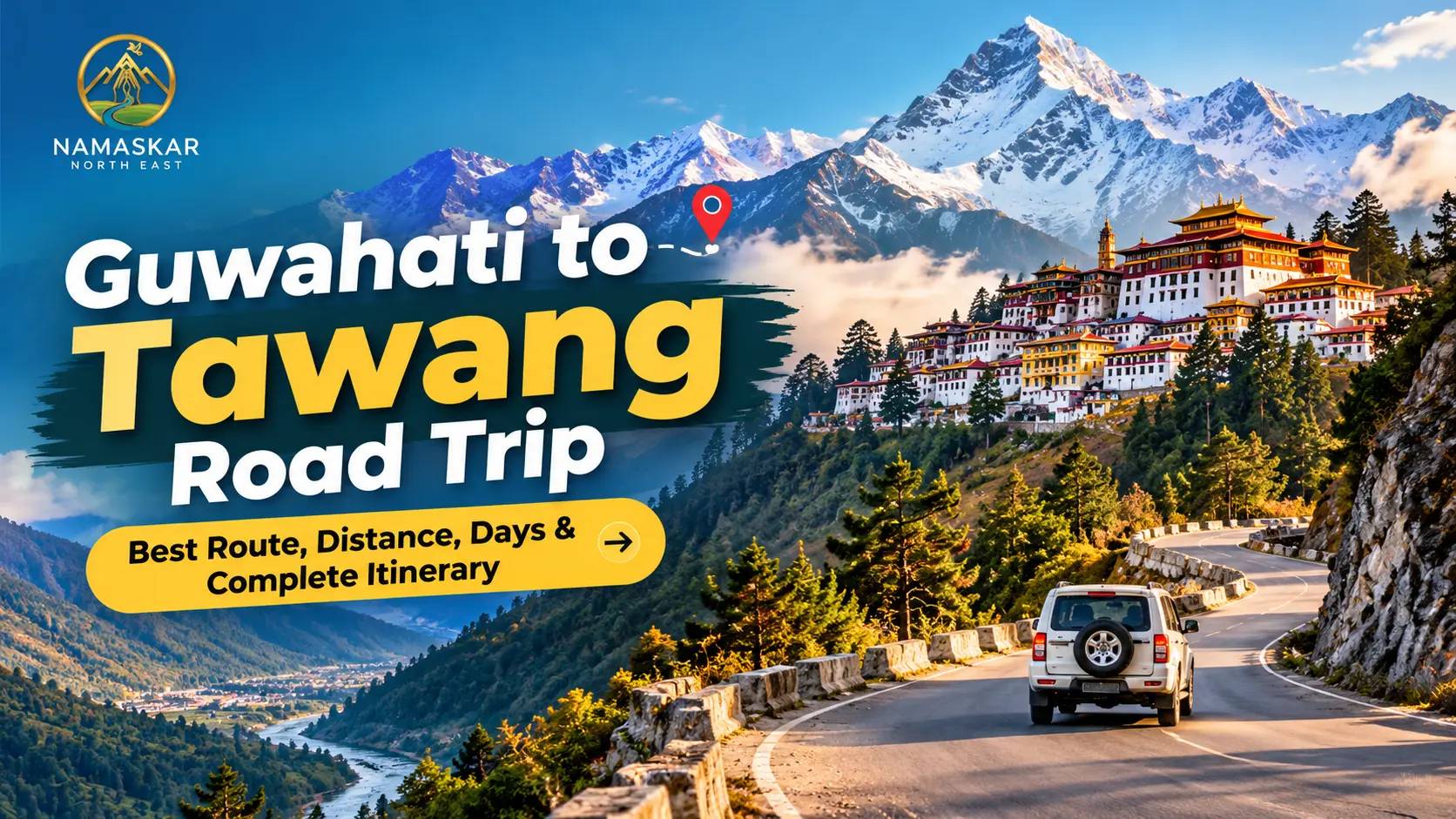
Getting to Tawang is not simply about covering a distance. It is part of the experience.
From Guwahati
For most travellers coming from outside Arunachal Pradesh, Guwahati in Assam is a major gateway.
From Guwahati, the road journey generally passes through places such as Tezpur, Bomdila and Dirang before crossing the high-altitude mountain roads towards Tawang.
The journey is long, but it is filled with dramatic changes in scenery — from the plains of Assam to forests, valleys, mountain settlements and eventually the high Himalayan landscape.
By Air
The nearest major airport with extensive connectivity is Lokpriya Gopinath Bordoloi International Airport in Guwahati.
Arunachal Pradesh also has airports and air connectivity options in other locations, but their usefulness for a Tawang trip depends on the current schedule and onward road connections.
For most tourists, the road journey remains an important part of the Tawang experience.
By Train
The railway network does not reach Tawang.
Travellers can use railway stations in Assam and continue by road. Rangapara North is one of the railway points used for journeys towards western Arunachal Pradesh, although the most convenient route depends on the traveller's starting point and current transport availability.
The Journey Through Sela Pass
One of the most memorable parts of travelling to Tawang is crossing Sela Pass.
At an altitude of more than 13,000 feet, the pass offers an extraordinary Himalayan landscape.
Snow, mountains, frozen water, winding roads and vast stretches of silence can make the journey feel almost unreal.
But Sela is also a reminder that Tawang is a high-altitude destination. Weather conditions can change quickly, and road access can occasionally be affected by snowfall, landslides or other mountain conditions.
Always check the latest road and weather conditions before travelling.
Permits for Tawang
Travel requirements are an important part of planning a trip to Arunachal Pradesh.
Indian citizens from outside Arunachal Pradesh generally require an Inner Line Permit (ILP) to enter the state.
Foreign visitors have separate permit requirements, including the Protected Area Permit (PAP) framework applicable to Arunachal Pradesh.
Permit rules and procedures can change, so travellers should verify the latest requirements through official Arunachal Pradesh government or tourism sources before beginning their journey.
Where to Stay During the Tawang Festival
Tawang has accommodation options ranging from hotels and guesthouses to homestays.
But festival periods can bring a significant increase in demand.
If you are travelling specifically for the Tawang Festival, book your accommodation early.
Do not treat Tawang like a destination where you can arrive without a plan and easily find a room at the last minute.
Staying in a local homestay can also make the experience more personal. You get more than a bed for the night — you may get conversations, home-cooked food and small insights into everyday life in the mountains.
How Many Days Do You Need for Tawang?
Do not plan Tawang as a rushed weekend trip from Guwahati.
The journey itself takes considerable time, and altitude makes rushing particularly unpleasant.
A longer itinerary allows you to travel more comfortably and explore places around Tawang instead of spending most of your holiday inside a vehicle.
A typical itinerary can include:
- Guwahati → Tezpur/Bhalukpong
- Bhalukpong → Dirang/Bomdila
- Dirang/Bomdila → Tawang
- Tawang and surrounding attractions
- Return journey to Assam
If you have additional time, explore destinations such as Madhuri Lake, Bum La Pass, P.T. Tso and Nuranang Falls, subject to current road conditions and permit requirements.
Give Yourself Time to Acclimatise
Tawang's altitude should not be underestimated.
Coming directly from the plains of Assam to elevations above 10,000 feet can be physically demanding for some travellers.
Avoid packing every hour of your itinerary.
Give your body time to adjust, stay hydrated and take things slowly, particularly during the first day or two at higher elevations.
If you develop significant altitude-related symptoms, seek medical assistance rather than trying to push through them.
What Should You Pack for the Tawang Festival?
Even during the autumn festival season, Tawang can be cold.
Pack:
- Warm layers
- A windproof or waterproof jacket
- Comfortable shoes with good grip
- Sunglasses
- Sunscreen
- Lip balm and moisturiser
- Personal medicines
- Water bottle
- Power bank
- Basic snacks for the road journey
- Necessary identity and permit documents
And keep some space in your bag.
You may find a handmade piece of Monpa craft that you will want to take home.
Beyond the Festival: What Else Can You See in Tawang?
The festival can be the reason you visit Tawang, but it should not be the only thing you see.
Tawang Monastery
Perched above the town, Tawang Monastery is the spiritual and cultural landmark most closely associated with the region.
Its scale, architecture and mountain setting make it one of the defining sights of Arunachal Pradesh.
But perhaps the best way to experience it is not to arrive with a checklist.
Sit quietly.
Listen.
Look at the prayer flags.
Watch the mountains.
Let the place exist without immediately trying to photograph everything.
Nuranang Falls
Also known as Jang Falls, Nuranang Falls is one of the most spectacular waterfalls in the region.
Water plunges down a dramatic mountain landscape, making it a favourite stop on the road towards Tawang.
Madhuri Lake
Known locally as Sangetsar Lake, Madhuri Lake is surrounded by mountains and has an almost otherworldly appearance.
The journey there is as memorable as the destination itself.
Bum La Pass
Located close to the India-China border, Bum La is a high-altitude destination requiring the necessary permissions.
Weather and road conditions can be challenging, so travellers should always follow local regulations and current access instructions.
A Festival, But Also a Window Into a Culture
The most meaningful way to experience the Tawang Festival is to look beyond the stage.
The costumes are beautiful.
The dances are captivating.
The mountains are extraordinary.
But behind all of that are people, memories and traditions.
The festival offers visitors a brief opportunity to encounter the cultural world of the Monpa people and other communities of Arunachal Pradesh. That encounter becomes more meaningful when travellers approach it with curiosity rather than treating culture as entertainment alone.
Ask before photographing people.
Buy directly from artisans when possible.
Taste local food with an open mind.
Listen to the stories behind the traditions.
And remember that you are visiting someone's home, not simply another tourist attraction.
Is the Tawang Festival Worth Visiting?
If you are looking for a conventional city festival with easy transport, large commercial venues and predictable schedules, Tawang may feel very different.
But if what you want is a journey where the road, landscape, people and culture become part of the experience, the Tawang Festival offers something far more memorable.
There is something beautiful about reaching a place after hours of winding through the mountains and finding a festival waiting there.
The drums begin.
The dancers appear.
Prayer flags move in the cold wind.
Someone pours you a cup of hot tea.
Beyond the crowd, the mountains remain impossibly still.
And for a moment, the journey feels worth every bend in the road.
Perhaps that is the real charm of the Tawang Festival.
You do not simply travel to Tawang to attend a festival.
You travel through mountains to arrive at a culture — and return with a little more of the mountains inside you.
Final Thoughts
Some destinations give you photographs.
Some give you stories.
And a few give you a feeling you cannot quite explain when you return home.
Tawang is one of those places.
Perhaps years later, you will not remember every dance you watched or every photograph you took. You may instead remember the cold mountain air, the sound of prayer flags, the long road through Arunachal, a conversation with a local, or the first glimpse of Tawang Monastery rising above the town.
That is what makes travelling here different.
The Tawang Festival is not merely an event on a calendar. It is an invitation to slow down, travel farther and listen to a part of the Himalayas that has its own rhythm.
Also read -
Is It Safe to Travel to Shillong Now?